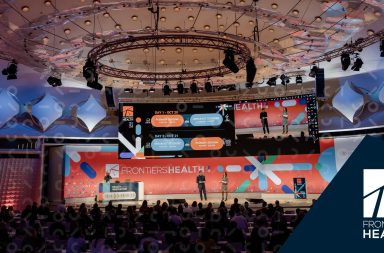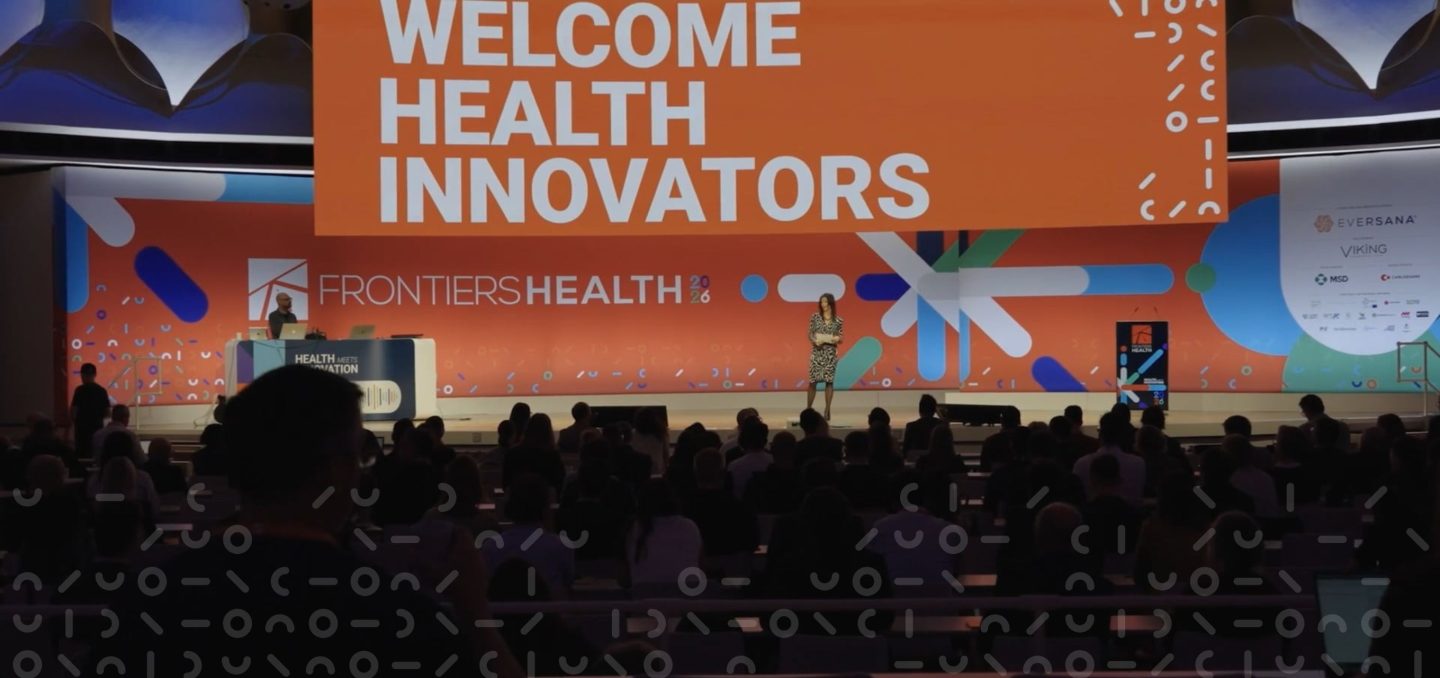
This selection of plenary sessions at Frontiers Health 2026 expanded the conversation beyond healthcare’s traditional boundaries.
While digital transformation and artificial intelligence remain key drivers of change, these sessions explored a broader question: where will the next wave of health innovation come from? The answers ranged from disability management and mental health to consumer experiences and even space-based research.
Together, the speakers challenged attendees to rethink how care is designed, delivered, and experienced, highlighting a future in which health is increasingly integrated into everyday life, supported by trusted relationships, and shaped by innovation emerging from unexpected places.
Hybrid Care Delivery at Scale: Lessons from Disability Management
In her keynote, Yvonne Chan, founder of Sante Circle Health and now part of Canada Life Europe, challenged conventional approaches to healthcare and disability management by arguing that recovery should be measured through function rather than diagnosis. Drawing on her personal experiences navigating serious injury and long-term rehabilitation, Chan illustrated how healthcare systems often focus on clinical milestones while overlooking what matters most to patients: their ability to participate in daily life, work, family, and community. Her central message, distilled into three simple words, was clear: “Believe the person.”
Watch it for free here. Registration is required.
At the heart of her presentation was the idea that function provides a universal language for health. While diagnostic codes may be standardized, every individual’s lived experience is different. This insight became the foundation for Sante Circle Health, a platform designed to transform complex disability assessment frameworks into a streamlined digital model capable of evaluating day-to-day function, cognitive performance, pain interference, and activities of daily living in just minutes. For employers, insurers, and healthcare providers, the takeaway was clear: successful rehabilitation requires hybrid care models that combine technology with human support and focus on restoring meaningful function rather than merely tracking medical milestones.
Beyond the Title: Sheikha Maytha on Privilege, Purpose and Scaling MindFriend
In a candid fireside chat with Roberto Ascione, Sheikha Maytha Bint Maktoum, founder of MindFriend, explored one of the most urgent healthcare challenges of our time: expanding access to mental health support without compromising trust, quality, and human connection. Drawing from her personal experiences, her academic background in psychology, and her work in psychiatric and forensic settings, she shared the vision behind MindFriend and the need for better mental health education, literacy, and access worldwide.
Watch the keynote here
A recurring theme throughout the conversation was the importance of helping people navigate an increasingly complex mental health landscape. Rather than positioning technology as a replacement for clinicians, Sheikha Maytha argued that digital platforms should strengthen the connection between patients and qualified professionals. MindFriend’s mission is built around creating a trusted global network of psychologists, psychiatrists, and therapists while helping individuals understand what support they need and how to access it. Discussing the role of AI, she emphasized that technology should reduce administrative burden and improve clinical efficiency while leaving empathy, trust, and care firmly in human hands. Ultimately, she suggested, success in mental healthcare should be measured not by growth metrics or valuations but by the ability to build trusted systems that deliver meaningful long-term outcomes.
The Health Shifts 2026: The New Front Door of Health
Healthcare futurist and author Christophe Jauquet invited the audience to look beyond hospitals, clinics, and digital health platforms to understand where health innovation is increasingly taking shape. His keynote argued that the new “front door” of healthcare is emerging through consumer experiences embedded throughout everyday life. From connected vehicles and smart home technologies to wellness brands, retailers, and digital services, health is becoming less of a destination and more of an integrated feature of daily living.
You can watch it for free on the Frontiers Health Video Portal upon registration.
Jauquet described this transformation as the rise of“health enthusiasm”, a growing expectation that health, prevention, wellness, and longevity should be seamlessly incorporated into products and services across every sector. He highlighted South Korea’s emergence as a global innovation leader through what he called“K-Health”, a model that blends healthcare, beauty, wellness, prevention, and consumer engagement into highly accessible experiences. The session also explored how homes are becoming increasingly sophisticated environments for monitoring and managing health through connected devices, wearables, AI-powered assessments, and personalized guidance. Looking ahead, Jauquet argued that healthcare organizations must adapt to patient expectations shaped less by healthcare institutions and more by the consumer experiences people encounter every day.
Health from Space: Disruptive Innovations for Life on Earth
One of the most unconventional perspectives of the conference came from Paul Kamoun, who explored how space-based research is opening entirely new possibilities for healthcare innovation. His keynote focused on the extraordinary scientific opportunities created by microgravity, which he described as one of the most powerful environments currently available for understanding human biology and accelerating pharmaceutical development.
Interested in the subject? Watch the keynote for free here.
Drawing on more than two decades of research conducted aboard the International Space Station, Kamoun explained how microgravity enables scientists to observe biological processes associated with aging, disease progression, and cellular behavior in ways that are difficult or impossible to replicate on Earth. He highlighted advances in organoids, three-dimensional tissue models, protein crystallization, and autonomous orbital laboratories that are helping researchers develop new approaches to drug discovery and biomanufacturing. Importantly, he argued that space research is no longer reserved for astronauts and government agencies. Falling launch costs, reusable space infrastructure, and remotely operated research facilities are making orbital experimentation increasingly accessible to biotechnology companies, pharmaceutical organizations, and academic researchers. As healthcare continues to seek new platforms for innovation, Kamoun suggested that some of the most significant breakthroughs of the coming decades may emerge from beyond Earth itself.