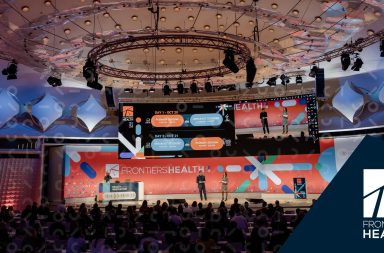
In this second recap from Frontiers Health 2026, we explore three conversations shaping the future of healthcare: women’s health innovation, patient-centered commercialization, and the growing role of artificial intelligence.
Why Women’s Health Could Become Europe’s Next Great Innovation Opportunity
Ida Tin, entrepreneur and founder of the term “Femtech”, delivered a forward-looking keynote. She argued that women’s health is on the verge of a transformative leap. Tin reflected on how the Femtech ecosystem has evolved over the past decade. What began with consumer-focused products now includes advanced technologies across diagnostics, chronic disease management, fertility, menopause, and preventive care. According to Tin, this evolution has created one of healthcare’s largest untapped opportunities. More women are seeking data-driven solutions tailored to their specific health needs.
Watch the keynote here
Central to her vision was the growing importance of hormone data. Tin described hormones as the body’s operating system and argued that continuous hormone monitoring could unlock an entirely new era of personalized medicine. She pointed to advances in biosensors, artificial intelligence, and digital health infrastructure. Together, these developments could make real-time hormone measurement possible. They could also reveal insights that healthcare systems cannot capture today. At the same time, she highlighted the persistent mismatch between the scale of the opportunity and current investment levels, calling for greater public and private commitment to women’s health innovation.
Tin also highlighted a strategic opportunity for Europe. Tin argued that Europe should invest in women’s health, sex-specific medicine, and next-generation health data platforms. Doing so could help build a healthier population and a globally competitive industry. Her message was clear: policymakers, investors, and healthcare leaders should treat women’s health not as a niche category, but as a strategic pillar for public health and economic growth.
Patients at the Center: Rethinking Commercialization for Real-World Impact
Moderated by Mike Ryan, President Europe, EVERSANA, this panel, featuring Felipe Florez-Arango (Helvion Pharma), Yariv Hefez (Former Merck), and Stefan Zillikens (Cogent HealthCare), brought together industry leaders to explore a longstanding challenge: how can healthcare innovation be translated into meaningful patient impact?
The discussion focused on the importance of understanding patient needs from the earliest stages of drug development. Scientific breakthroughs alone are not enough. Successful commercialization also depends on factors such as treatment simplicity, patient experience, and real-world adherence. Too often, innovations fail to achieve their full potential because the patient perspective is considered too late in the process.
You can watch the panel here.
A recurring theme was the need to move beyond traditional success metrics and place patient outcomes at the center of decision-making. The panel highlighted the value of patient-reported outcomes, deeper engagement with patient communities, and greater involvement of patients in clinical trial design and product development. Participants suggested that AI could help identify patients earlier, improve diagnosis, and generate richer insights. However, they stressed that technology should support meaningful human engagement rather than replace it. Ultimately, the conversation reinforced the idea that the future of healthcare commercialization will be measured not only by sales, but by demonstrable improvements in patients’ lives.
From Efficiency to Growth: Healthcare’s Next AI Frontier
In a wide-ranging discussion on the future of artificial intelligence in healthcare, industry leaders examined how organizations can move beyond using AI primarily for efficiency and begin leveraging it as a driver of growth, innovation, and improved patient outcomes. The panel argued that while efficiency gains have been a necessary starting point, the true opportunity lies in applying AI to identify undiagnosed patients, accelerate clinical decision-making, improve disease detection, and create entirely new models of care. While efficiency may be AI’s first dividend, participants argued that its greatest value will come from transforming how healthcare is delivered, experienced, and accessed.
This session is available to watch for free upon registration here.
The conversation also examined the organizational changes required to realize this potential. Speakers argued that technology adoption alone will not be enough. Organizations must redesign workflows, build cross-sector partnerships, and develop skills that combine technical expertise with human judgment and empathy. Rather than replacing people, AI was consistently framed as an amplifier of human capability, enabling healthcare professionals to make better decisions and focus on higher-value activities.
The panel described a future in which AI plays a greater role across healthcare systems. It could influence decisions on diagnosis, treatment, and patient engagement. This shift, they argued, will require renewed attention to transparency, accountability, trust, and equity. AI capabilities continue to advance rapidly. Healthcare leaders must ensure that this progress improves patient outcomes while preserving the human relationships at the heart of care.