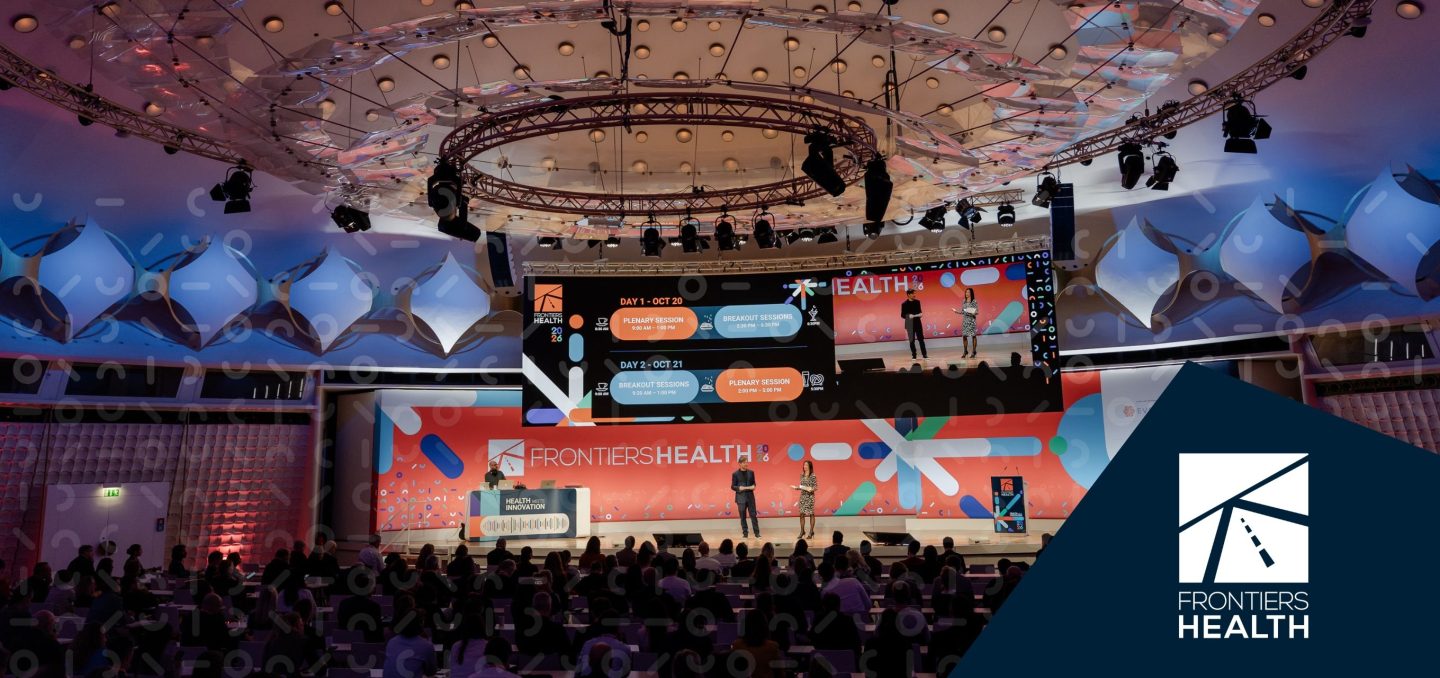
The 11th edition of Frontiers Health brought together global health leaders, entrepreneurs, and visionaries at the bcc Berlin Congress Center. Moving beyond isolated pilot projects and basic digital experimentation, this year’s conference focused on systemic transformation, AI integration, and cross-industry breakthroughs.
Opening Monologue: The Human Core of Healthcare’s Next Chapter
Opening Frontiers Health 2026 in Berlin, Roberto Ascione, Chairman of Frontiers Health and CEO of Future Health Group, reflected on how the ambitious ten-year roadmap unveiled a year ago is materializing far faster than anticipated. Healthcare is rapidly shifting from the hospital to the home, from systems to individuals, and, most importantly, from reactive treatment to anticipation.
Yet this turning point brings significant challenges. Health systems remain under pressure, too many breakthroughs still fail to reach people at scale, and women continue to be underserved by the data shaping modern medicine.
Ascione’s central message was clear: as technology becomes increasingly powerful and accessible, human empathy, trust, and connection will become even more valuable. The next decade must move beyond experimentation to build sustainable businesses that bring innovation to the masses through collaboration across companies, institutions, and governments.
The Fastest Path to AI-Native: Rethinking Business from the Ground Up
Nikky Kho delivered a high-energy keynote challenging organizations to move beyond simply experimenting with AI and embrace a more fundamental question: If you were building your company from scratch today, as an AI-native organization, what would you do differently?
Watch the recording here.
Sign up for free to access all the recordings from the conference.
Drawing on his experience building AI-driven startups, entrepreneur communities, and automated business systems, Kho argued that the greatest opportunity lies not in adding AI to existing workflows, but in redesigning processes around AI from the ground up. Throughout the session, he showed how AI agents can accelerate operations, content creation, marketing, and decision-making while dramatically increasing execution speed.
However, he was equally clear about AI’s limits. While technology can automate repetitive tasks and enhance productivity, human judgment, trust, empathy, customer relationships, and strategic decision-making remain irreplaceable. The organizations that succeed, he argued, will be those that combine AI-powered efficiency with uniquely human capabilities.
From Scale-Up to Strategic Asset: Digital Health’s Consolidation Moment
In a fireside chat exploring the acquisition of NeuroNation by the Schwabe Group, Jakob Futorjanski, CEO and Founder of NeuroNation, and Caspar Graf Stauffenberg, Managing Partner at Carlsquare, argued that Europe is entering a new phase of digital health maturity, where successful companies are increasingly valued as strategic assets rather than standalone ventures. Drawing on the NeuroNation transaction as a case study, they highlighted how pharmaceutical companies are looking beyond traditional products to integrate digital capabilities, creating synergies between established healthcare businesses and scalable digital platforms.
Watch the recording for free here
A central theme of the discussion was the emergence of hybrid models that combine therapeutics, patient engagement, data, and digital interventions. Futorjanski described how digital health companies can generate value not only through clinical outcomes but also through deeper patient insights, improved adherence, and more effective healthcare professional engagement. At the same time, both speakers emphasized that consolidation offers a practical response to increasing regulatory complexity and operational costs, enabling organizations to share infrastructure, scale more efficiently, and accelerate growth.
Looking ahead, they predicted continued consolidation across the sector, driven by the need for stronger market positions, scalable commercial platforms, and sustainable business models. Ultimately, the conversation suggested that the next generation of digital health leaders will be those capable of combining scientific credibility, digital distribution, regulatory expertise, and strategic partnerships into integrated healthcare ecosystems.
Just Breathe: Reinventing Respiratory Diagnosis with AI
In a fireside chat with Ameera Patel, CEO of TidalSense, moderated by Marc Sluijs of digitalhealth.network, the discussion explored how artificial intelligence and novel sensing technologies are transforming the diagnosis of chronic respiratory diseases, particularly COPD, the world’s third leading cause of death. Patel outlined how TidalSense has developed a rapid breath-based diagnostic test that replaces the traditional spirometry approach, a methodology dating back to the mid-19th century, with a sensor-driven, AI-enabled alternative capable of delivering results in just a few minutes.
Watch the recording here; it’s free upon registration.
At the heart of the conversation was the challenge of underdiagnosis. COPD remains one of the most widespread yet under-recognized diseases globally, with significant delays in detection and treatment. Patel argued that faster, simpler, and more accessible diagnostic pathways are essential to shift healthcare systems from late-stage intervention to earlier identification and prevention. By combining proprietary hardware, software, machine learning, and extensive clinical data, TidalSense aims to make respiratory diagnostics more scalable, cost-effective, and patient-friendly.
The discussion also highlighted broader lessons for health innovation. Patel emphasized that meaningful AI in healthcare requires high-quality proprietary data, sustained investment, and the willingness to challenge long-established clinical practices. Looking ahead, she pointed to opportunities beyond COPD, including asthma and early-stage respiratory disease detection, while calling for greater investment in respiratory health, an area she described as significantly underfunded despite its enormous public health impact.
Stay tuned as we continue to bring you deep dives, exclusive interviews, and live updates on the groundbreaking discussions unfolding across the conference.